Western media reports on the Gulf War (1990–91), aka The First Space War, were characterized by a focus on high-tech digital systems such as satellite navigation, so-called ‘smart bombs’ and night vision instruments. While the actual military relevance of some of the featured technologies remains questionable, the conflict’s media representation marked the beginning of widespread perceptions of contemporary war waged by “the West” as a precise, high-tech endeavour, cleansed from the physical horrors of earlier forms of warfare.
This image changed in the 2010s with the online emergence of video documentation of ground warfare produced by military personnel of virtually any affiliation. The daily practice of war on the battlefields of Afghanistan, Syria and Ukraine now actually appeared to be in many ways very similar to mid-20th century conflicts. This implosion of the high-tech imagination of warfare due to the omnipresence of advanced consumer electronics on the battlefield may be called the dialectic of post-digital warfare.
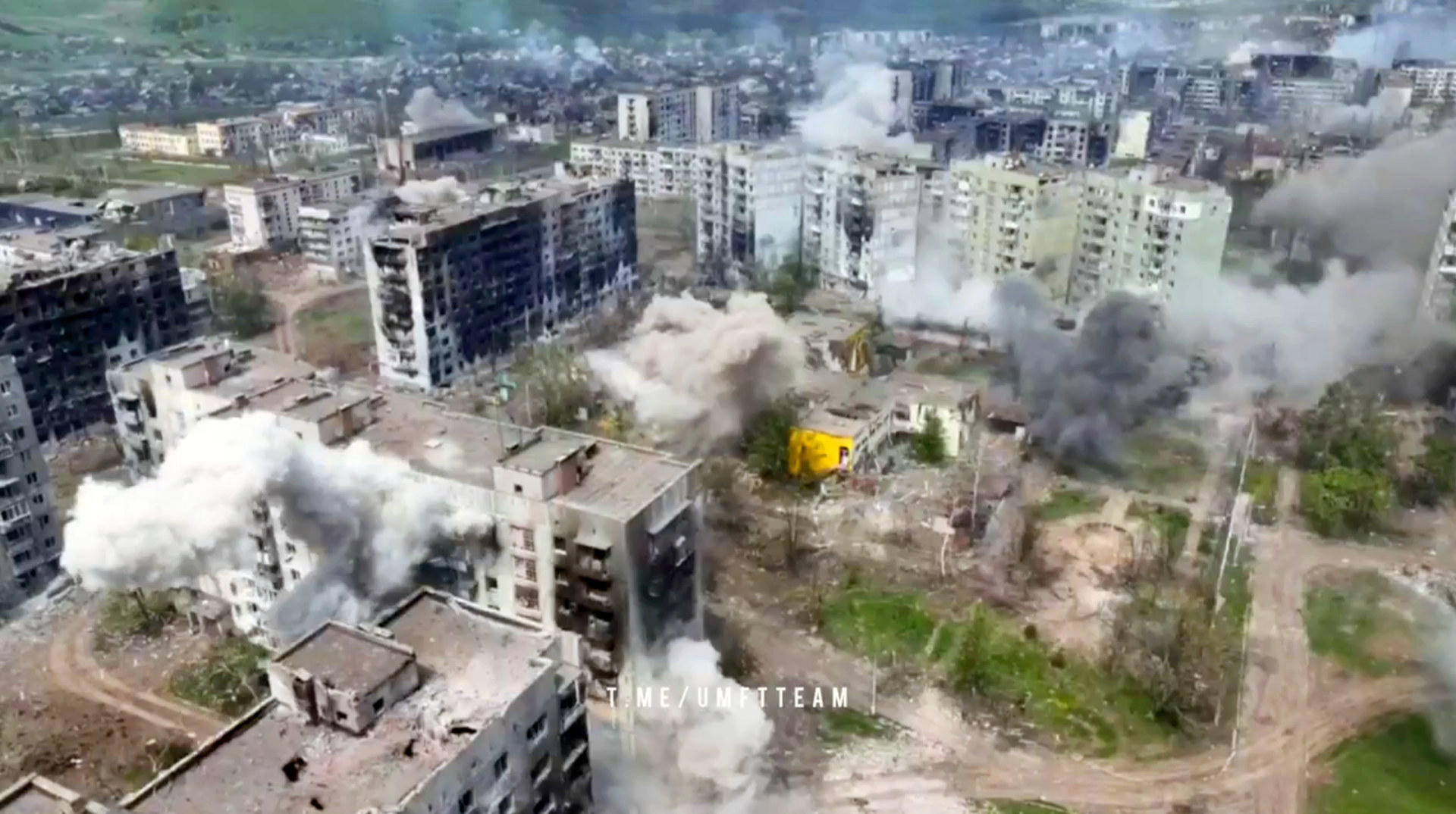
The recent emergence of consumer grade drones as weapons of warfare on a large scale has changed this paradigm though. Aerial perspectives, narratives of precision and gameification have now intertwined with trench warfare and mediatized bodily destruction. Have we entered the era of Space War 2.0?
Read full transcript (generated by Whisper)
So let me introduce Dani now. Dani Plöger is an artist and cultural critic and also a colleague teaching here in Munich who explores situations of conflict and crisis on the fringes of high-tech consumer culture. His work draws from field research on the use of everyday technologies under extraordinary circumstances and has accompanied frontline troops in the Russian-Ukrainian war to examine the informal use of consumer electronics, travel to dump sites in Nigeria to collect electronic waste originating from Europe and stolen razor wire from the so-called high-tech fence on the EU outer border in Hungary is currently developing. He is working on the development of anarchist refrigeration technologies for the Rojava revolution in North East Syria. Dani's work has been presented at the Venice Architecture Biennial, London Film Festival, Nairobi National Museum and ZKM. He has a PhD from the University of Sussex and is professor of performance and technology at the University of Munich, Music and Theatre in Munich. He initiated the Rojava Center for Democratic Technologies and is artistic director for Infabrik, a platform for art and industrialization in the Netherlands. Dani, the floor is yours. Thank you for the invitation. A low-cost flight beyond the dialectic of post-digital warfare is the title of my little presentation.
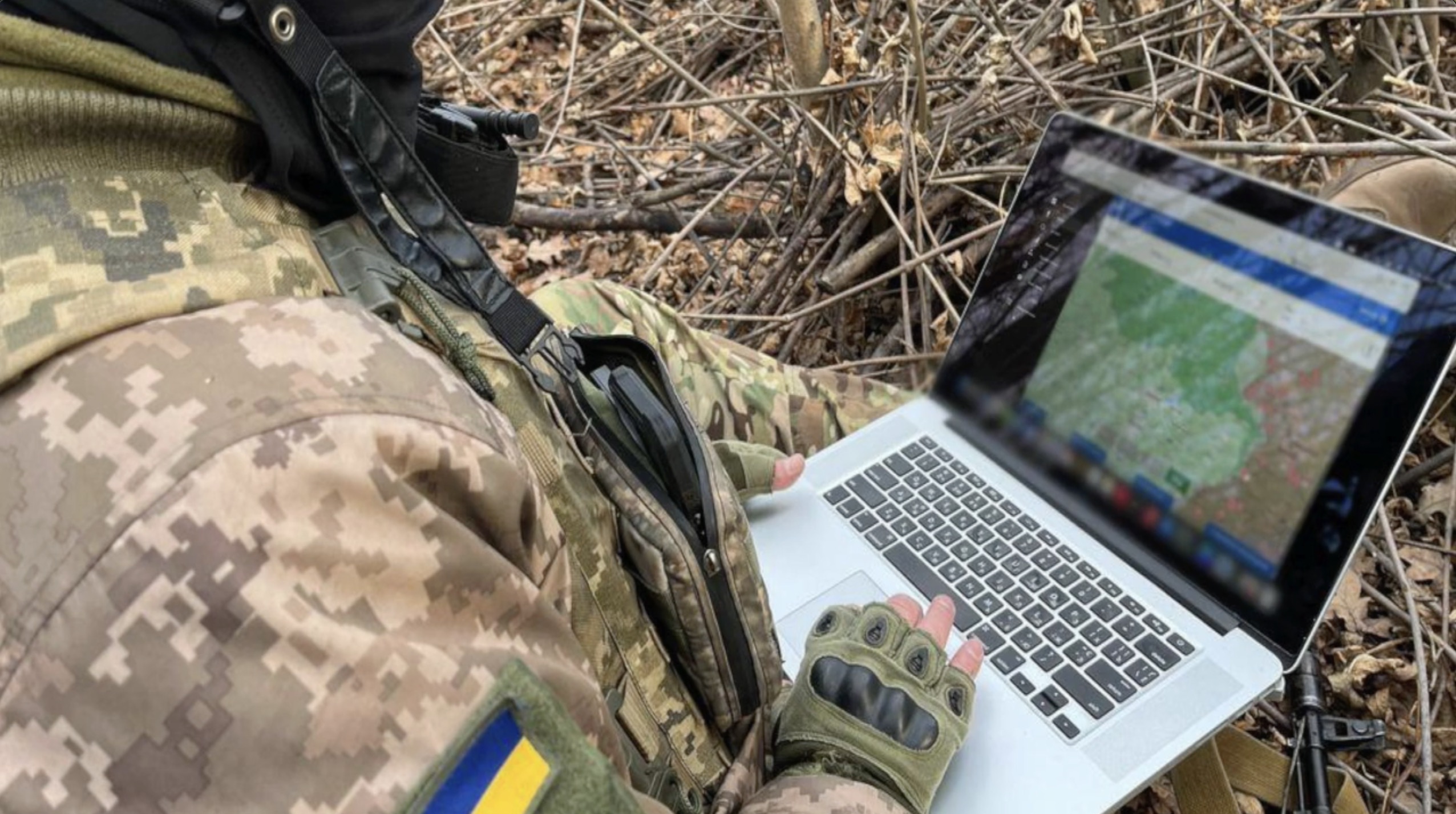
I will explain what I mean by the dialectic of post-digital warfare. What I will do is take some rudimentary attempts at the genealogy of weaponized consumer drones coming from two or three different angles and along the way I'll show some of the work that I've made over the past number of years that has to do with technology in conflicts, contexts, most of it not directly dealing with drones. Thank you. Thank you. Thank you. Thank you. Thank you. Thank you. Thank you. Thank you. Thank you. Thank you. Thank you. idea than that that was professed by these press conferences during the first Gulf War. So there seems to be a kind of democratization of the media footage of these wars, also wars waged by, in this case, the U.S. Army, that tell a slightly different story. And I hope you can still hear me. I think you can. I'll put this a bit softer. What we saw in the previous video, it's footage by a GoPro camera. And this film that I made in 2017 when I accompanied the Gulf of Poland fighters from the front line in Ukraine shows what's got here in a bit more detail.
We see soldiers here alternately shooting firearms and all sorts of. Consumer-grade digital devices. We just saw here the commander of the unit with his mobile phone. But in a minute, we'll see what's going on. Here's a GoPro. I'm also shooting with my mobile phone. And here you see it. Selfie shot. But I deliberately transfer this to 60 millimeter because I think what is quite telling here is that we see a sort of collision of worlds, right? At the point where everybody, including the volunteer fighters in the front line who don't receive pay on weapons and food, have advanced audiovisual technologies. There we see that these very technologies that arguably are also the offspin of, of, of this sort of techno culture that was promoted through images of high tech warfare start to reveal that these wars actually weren't as clean as we thought they had become. So what I would say would see as this dialectic of political warfare is that we see in the aftermath of the first Gulf War that representations of warfare in what we now call sort of mainstream or official media very much way towards a focus on the war.
But we also see that the war is not just a political war. It's a political war. It's a political war. It's a political war. It's a political war. It's a political war. It's a political war. And it's a very Banana and so much kind of history which has and I think has to those press conferences. And on the other hand, every day, some of the journalists being selected to come along with the troops, but only really embedded with the troops so they could only see the things that those troops would then want to say. But then through this kind of focus on this high-tech war, for example, GPS became incredibly popular in the civilian domain. That's really a direct offspring of this media representation of the Gulf War as well, right? GPS made the Americans win the Gulf War was the kind of narrative, but also made GPS very popular in the civilian domain. But also these GoPro cameras, cameras on the phone, all these can be seen and arguably also exist in that sort of aftermath of the first Gulf War and earlier and later military endeavors as military spinoff technology. So this representation of high-tech warfare contributes to the proliferation of those technological, technological devices.
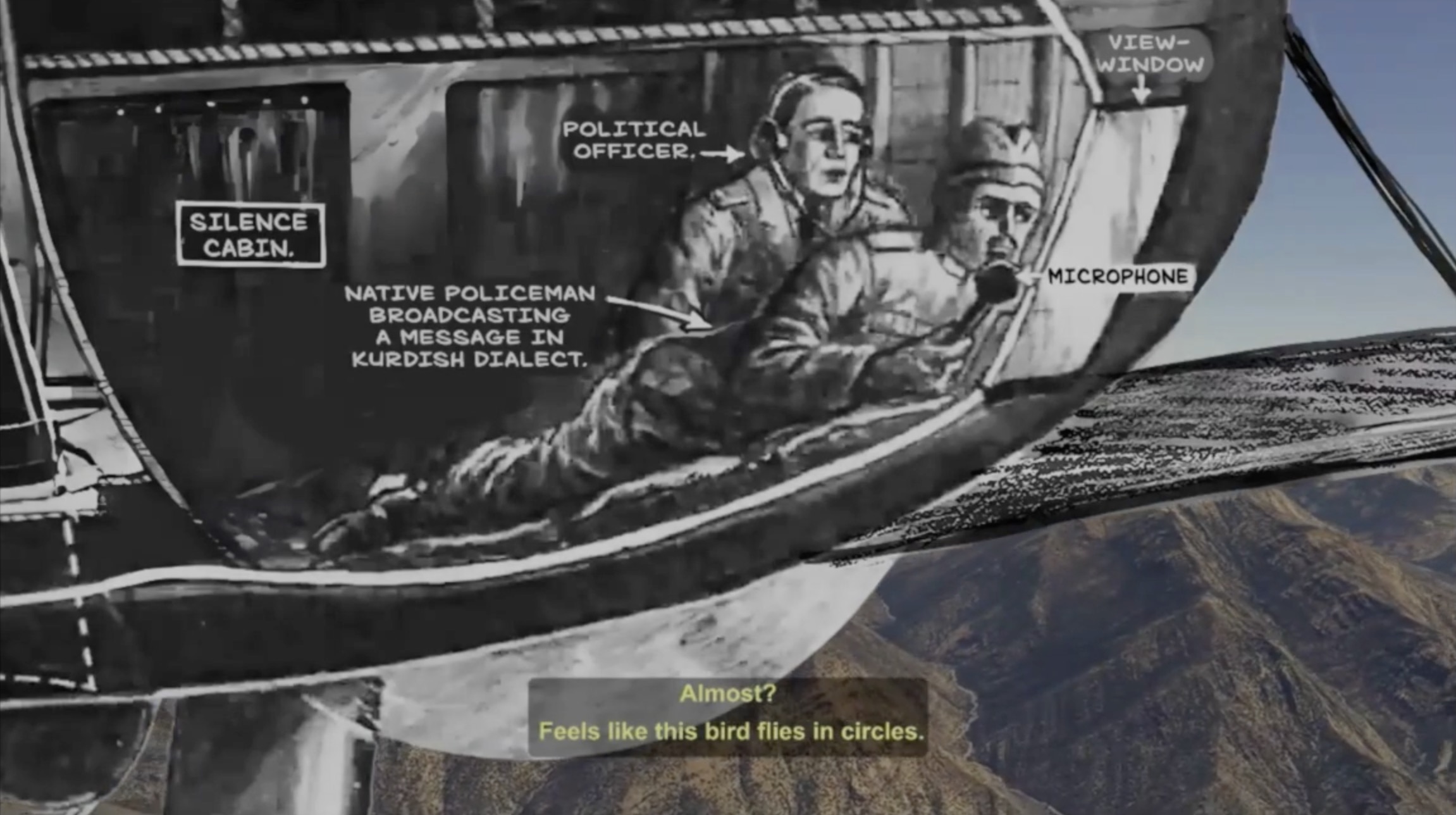
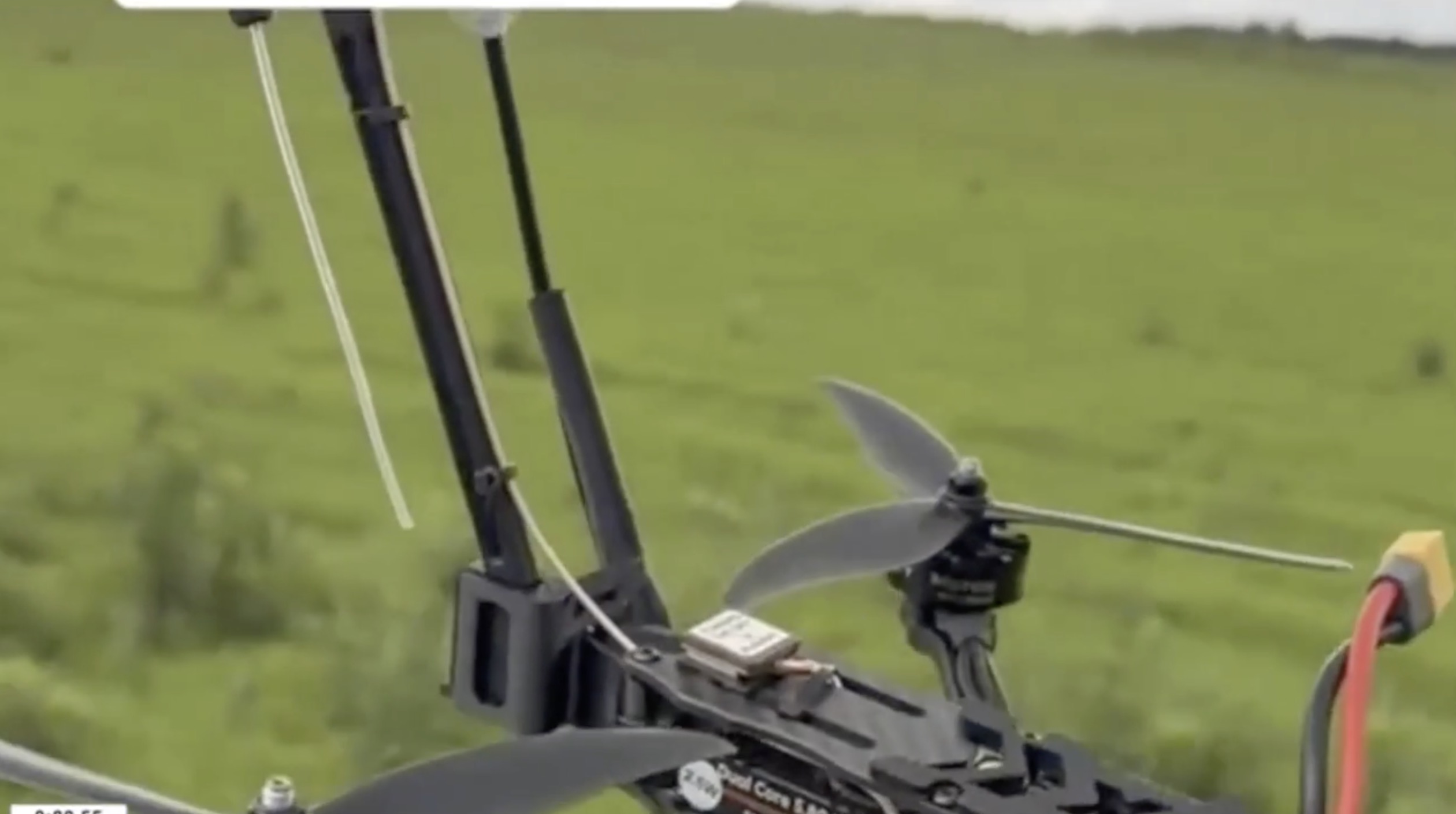
But then in the end, when we reach this sort of post-digital condition where they become the norm, where everybody has them, up to the fighters I just showed you on the front line in Ukraine, the representations that these technologies generate start to actually contradict that fantasy of the highly precise, cleansed high-tech warfare that has been waged. But now I think we are moving towards, you know, yet something else, namely with the emergence of weaponized consumer drones, both for surveillance, but also to actually be used as weapons to drop grenades and things like that. You see in the video here on the left. And I think here we see these two things come together, you could say, right? On the one hand, we have these aerial perspectives that look quite similar to the, you know, footage we saw on Schwarzkopf's television there in 1991, with the difference that there is here very clearly this sort of focus on a kind of trench warfare. But also, and very importantly, I think, the operators of these drones are operating from the actual front line in many instances. In most instances, I would say with these FPV drones, because they don't have a very, very large range.
So these things are actually coming together. It's no longer a kind of idea of a completely remote, you know, war where the soldiers affiliated with global Northern power in particular, are no longer on the battlefield and kind of out of risk, so to say. But at the same time, there is an actual, you could say, high tech dimension to these interventions that is not only on the level or primarily on the level of representation, because I think that's what we saw before, right? The narrative in the kind of official media narrative, until about the 2010s was, okay, all these wars are now done with very precise weapons from very far away. It's clean, no collateral damage, la, la, la. And then we start seeing, through the introduction of these advanced consumer technology on the battlefield, that actually this war is still all about confusion and nasty things. Like those American soldiers, it's quite telling, right? Where is it coming from? They're there in a ditch. They have no idea who's shooting at them from where. That's very much, very, very different from that general Schwarzkopf idea, right? Of, you know, okay, here's our target and we hit it.
So the question I would have here, then, if we think, are we now entering a kind of realm of space war 2.0, right? Space war one, the first space war, was the first Gulf War, arguably, because of GPS and la, la, la. But also then, this was partly a sort of narrative that misconstrued what was really going on. Only 5% of the bombs dropped in the first Gulf War were actually so-called, smart bombs. Then, apart from the question whether how smart they really were and whether they were infallible, like some of the papers we've just heard, of course, also rightly doubt that, I mean, 95% of the bombs were the same kind that you would drop in the Vietnam War or earlier wars. So, but here we see that these aerial perspectives actually are becoming something that is really very, very widespread, but also directly tied to consumer culture. But then, one thing, that I would want to move towards as well, is that if we think about the sort of genealogy of the weaponized consumer drone, if we look at it from this perspective, we see it in the context of, or in relation to, the industrially produced drones, and more generally, to industrially produced weaponry and kind of official military activity.
But I think if we look at an image like this here, and the one on the left is from just a few days ago, these are Hayat Tahrir Sham fighters, close to Idlib, and they're showing off their drones, which they have modified to drop, they are mortar shells, if I'm not mistaken, but the way they've been modified, I think show also in a very visual way, clearly their affiliation with what you see on the right, an improvised explosive device. So I think we should also really look at these consumer drones, that are weaponized, in relation to a very long tradition of creating improvised explosive devices. Suddenly there was a bright flash, bits of metal, dirt, body parts, blast through the air like a sandstorm. I was knocked down, screams of pain, awful noises around me. I was knocked down, screams of pain, an improvised explosive device is an ugly thing, a monstrous object built to do its job, nothing more, nothing less, to destroy. Its appearance is of no interest, its explosive force maximized. How different does it appear from its industrial counterparts, the smooth surfaces of the glorified weapons of state armies? Bombs are sold like desirable commodities, presented as fetish objects at arms trade fairs.
Their official representations are of the greatest beauty, from the distance, preferably at sunset. Embedded journalists are ushered to the spot with the prettiest views. What if we made an IED that does not destroy, but instead recreates this obscene beauty, supersedes it, implodes its propaganda potential? A weapon of beauty that overcomes the violent essence of commodity culture. A safe space where the human community sirs quite as lovely. There, we will see more of those aspects as we look across our souvent frowned grandparents of the industrial generation. So, if we look at the history, which is still quite recent, industrially produced weapon, but there is little regard for the aesthetics. And although we could see that in the image of the two HTS fighters here as a kind of the drones, a visual, as a kind of physical object, there definitely is a very significant aesthetic dimension to all that footage that is generated by the drones and how this is modified and disseminated online. So if we look at the weaponized consumer drone within a sort of genealogical perspective tied to the history of the IED, then we see that there is a kind of development in the aesthetic considerations of that genre of insurgent or asymmetric warfare strategies.
So this is a drone. So this is a drone. This weapon actually works the same as a bomb that is triggered with a mobile phone. And the bomb indeed blows up when you call it. But instead of recreating this destructive force of the weapon, the industrial weapon, this actually recreates and tries to outdo. The perverse static dimension of the weapon that is traded on a weapon straight. So arguably the most iconic weapon of maybe all times, or at least the 20th century is this fat man bomb that was dropped on Nagasaki is here made in shiny silver to make it even more beautiful. So this was this was part of a research project as V2. And to improvise. So what kind of resistance we mean by that. The petrol warranty supplier hadwhen he made that competition with robotics. So basically they used, as they said,�� a film that would actually shoot down when they mounted a hospital. Now that when they rolled off, a place that was比較 solid, almost a shell savaver thinner it was a Christopher the прошлeman. He saw what was going on. He showed him, he saw what had happened. Yeah. I don't know.
I don't know. I don't know. I don't know. I don't know.